Total Pageviews

Translate

Followers

Showing posts with label Office Handout. Show all posts

Monday, May 24, 2021

Achilles Injuries when more than "Itis": Partial Tears and Tendinosis (Dr. Blake's Office Handout)


The following is my office handout for patients who present with more than inflammation to the achilles called achilles tendonitis. The tendon typically is swollen compared to the other side, and the pain is more than in "itis" situations. Tendinosis is typically chronic, where partial tears can be acute or chronic. 

Achilles Tendinosis and Partial Tears 

     Achilles Tendinosis implies that the tendon is damaged more than inflamed (like in Achilles Tendinitis conditions). Partial Tears are part of this condition that drives everyone, doctor and patient, bananas. There are so many degrees of tendon disease. MRIs, if possible, should always be done to document what is going on. The top 10 treatments for achilles tendinosis and partial tears are:

1.      When the tendon is thicker than normal, or swelling that will not go away, consider an MRI to check if a partial tear is present.

2.      With tendinosis, some form of immobilization is important to create a pain free  environment (tape, below knee cam walker, AFO, high top boot).

3.      With a partial tear of the achilles tendon, 3 months of cam walker/removable boot is crucial (when a pain free situation cannot be obtained with activity modification).

4.       With tendinosis, physical therapy can occur at the same time as the immobilization, but with a partial tear, physical therapy normally starts after the 3 months of immobilization.

5.        Both of these conditions may require surgery, so a surgical consult should be done to evaluate options (so that the patient is aware of their upcoming choices).   

6.       As the tendon gets less sore with icing for 5-10 minutes 3 times per day, gradually begin to strengthen. I love 2 positional heel raises up to 100 each evening as long as there is no pain, gradually leaning to the injured side, and gradually progressing to 25 one sided calf raises.


7.      Achilles tendon stretching, both straight and bent knee, should be done painlessly 3-5 times a day.

8.        PRP injections is a rising star in medicine, in an attempt to hopefully avoid surgery, may be considered.

9.       Like in all cases of achilles pain, heel lifts and custom orthotic devices are standard.

10.    Avoid barefoot and negative heel positions for a year following the Return to Activity Phase.

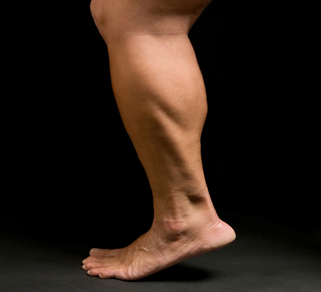
When the heel drops below the plane of the ball of the foot, it is considered in a negative heel position, and can get over stretched and re-torn.

Monday, May 17, 2021

Sesamoid Fracture: Dr. Blake's Office Handout for Patients

In my office, I have developed many handouts to give to patients for many topics. Since I treat so many Sesamoid Fractures, I thought I would share this one. Rich 

Sesamoid Fractures


The top 10 initial treatments for sesamoid fractures are: 

  1. Exogen bone stimulator for 6 to 9 months

  2. Removable boot or a stiff soled shoe like Bike Shoes with Embedded Cleats for 3 months to create a consistent pain free (0-2 pain level) healing environment.

  3. Ice pack twice daily and contrast baths each evening for anti-inflammatory and deep bone flushing. Do the contrast baths twice on non-work days.

  4. During the initial 3 months of immobilization, have orthotic devices developed that off weight the sesamoids.

  5. Learn how to use 1/8th inch adhesive felt from Moore Medical to make dancer’s pads for the boot and for post-boot action.

  6. Learn how to spica tape for post boot action

  7. When you are not wearing the boot, avoid barefoot.

  8. Do cardio, core and foot and ankle strengthening the minute you hurt the bone, and on a daily basis. Keep Strong and Keep Fit!!

  9. Since we are dealing with bone metabolism, make sure your calcium and Vit D intake is good, and get counseling if you think that there might be a bone density issue.

  10. Use strict activity modification principles to keep the pain levels between 0-2 as you go from boot to regular shoes. The weaning out of the boot period can take anywhere from 2 to 6 weeks and no added soreness is allowed.


So, what do we know about sesamoid injuries that may help? Here are my top 20 plus pointers when teaching about sesamoid fractures.

  1. They almost always heal.

  2. Even with normal healing, they can take up to 2 years so patience is a virtue here (some fast and some slow, and all patients want the fast ones).

  3. Healing, and feeling better, is based on many factors that are unknown when the patient first presents.

  4. MRIs and CT Scans are common imaging techniques that can really elucidate the problem, and sometimes change the direction of the treatment.

  5. Follow up MRIs, when needed to check healing, are often done between 5-6 months after the first baseline MRI.

6.               The MRI can show initially that you are not dealing at all with a sesamoid fracture, but something else, and prevent treating the wrong diagnosis (self pay MRIs of this area are $750 (2021) in the San Francisco Bay Area).

7.               Since we are dealing with bone, we must look at diet, Vitamin D3 levels, calcium/zinc/magnesium, and bone density.

8.               Treatment of sesamoid injuries flows through 3 phases that are normally overlapping--Immobilization, Re-Strengthening, and Return to Activity.

9.               When the patient is in the Immobilization phase, the treatment visits should be thinking about (and acting on) the Return to Activity Phase with visits dedicated to shoes, orthotics, strengthening, cardio.

10.           Oftentimes treatment mistakes involve having the patient in the wrong phase (like return to activity when they should be in the Immobilization phase).

11.           One of the crucial aspects of treatment, that can be hard to design, is protected weight bearing inserts and shoes.

12.           As treatment starts, the patient is placed in an environment (be it cast, shoes, orthotics, boot, etc) that maintains 0-2 pain level.

13.           The initial goal is to create this pain free environment for 3 months by whatever means it takes.

14.           Non weight bearing (via crutches or scooters to off weight one leg) always increases swelling, so some protected weight bearing is crucial. Every step pushes fluid out of your foot.

15.           The best way for reduction of bone swelling is contrast bathing. Typically, icing twice daily and contrast bathing each evening is needed.

16.           If you are basing treatment on x-rays alone, you may be way off base.

17.           Do not let the joint freeze up (frozen toe syndrome) with routine pain free range of motion or mobilization techniques. Go to YouTube and type drblakeshealingsole Self Mobilization.

18.           Start strengthening the minute you get injured, or at least after you read this, even if it takes some modification for pain. Go to YouTube and type drblakeshealingsole foot and ankle strengthening playlist. Keep the joint/foot flexible and strong.

19.           Patients with sesamoid injuries are prone for setbacks so do not get discouraged.

20.           If you have a sesamoid fracture, one of the hardest fractures in the foot to heal, get a bone stimulator and begin using. Some insurance companies require 3 months wait to document delayed healing, some not. Self pay for Exogen Bone Stimulator is around $750.

Tuesday, April 13, 2021

Gout: Our Office Handout

Gout: Treat the symptoms Immediately


By Richard L.Blake, DPM


image.png

  Gout can affect many patients in a podiatry practice. The number one location for a gout attack is the big toe joint, but the other foot joints, the ankle, and the knee can have the excitement of an acute gout attack. In the photo below, the man's left big toe joint is slightly enlarged with some run of the mill wear and tear, and a prime suspect for developing gout in the future. Gout attacks have a propensity for affecting already damaged joint surfaces.


image.png


    I look at the source of a gout attack from 3 angles (or a combination of all 3): the kidneys for some reason are not flushing out the uric acid from the blood stream well enough, there is a systemic reason for increased metabolism which is producing more uric acid into the blood stream (uric acid being a normal breakdown product of nucleic acids called purines), and a recent diet of food rich in purines (which breakdown to uric acid).


    Common food concerns include:

  1. Limit organ meats, herring, mackerel, and anchovies
  2. Limit red meat such as beef, pork, and lamb (only 4-6 oz daily)
  3. Limit fatty fish and other seafoods such as tuna, shrimp, scallops, and lobster
  4. Limit beer
  5. Limit white bread, cakes, and candies
  6. Limit high fructose soft drinks and sodas
  7. Increase use of plant based proteins
  8. Increase use of low fat and fat free dairy
  9. Increase 100% juices
  10. Use of 5-10 ounces wine daily okay
  11. Use complex carbs such as whole grains, fruits and veggies
  12. Use of 4-6 cups of coffee for men seems to be helpful


image.png

 When you get an acute gout attack, your involved joint is normally red, hot, and swollen. The health care provider asks about your kidneys, your overall health, medications you are taking that may affect uric acid metabolism, any recent crash dieting, any recent changes in your diet like a vacation of eating rich foods, beer, etc, and possible infections anywhere that could have seeded the sore area, like a sore throat. A Gout Attack Looks Like An Infection. To help in the diagnosis of possible infection, the lab is asked to get Uric Acid, CBC with differential, and Sed Rate. The last 2 help with infection evaluation. Patients with an infection also may have systemic signs of fever, chills, malaise, etc, not seen with gout attacks.


 It is extremely important to know that once you get a gout attack, uric acid levels in your bloodstream drop as the crystals go into the joint, and your blood test is read as normal. But, you are still high normal, and you still did have a gout attack. At my hospital, Saint Francis Memorial Hospital in San Francisco, 8.7 mg/dl is still normal. When a patient comes into the office after a gout attack, the lab may read between 6.5 and 8.0. This patient has gout in my mind. I ask them to get a repeat uric acid test in 1 month and then 2 months to see what the uric acid levels are doing. In a patient whom has suffered a gout attack, even if they are mindful of their diet, their uric acid levels begin to go back up over the next 2 months. It takes these 3 blood tests to get a feel of how unstable the uric acid levels are for this patient.


 When a patient has a gout attack, any anti-inflammatory medication helps, like Advil, but I prefer to use indomethacin, but not advised in the elderly or children or those with a history of GI problems. In a normal size adult, you can use 75 mg 3 times over the first 24 hours as a loading dose, then drop to twice daily for the next 9 days. After these first 10 days, it is obvious how easy or hard it is going to be to get the symptoms under control. Most of my gout attack patients are placed into a removable cast to minimize the bending of the big toe joint, with EvenUp on the other side. The patient is advised to take food with indomethacin since it can be hard on the stomach. Gout attacks can occur from 2 days to 3 + months, so you need to treat quickly. Icing is important to both reduce blood flow to the inflamed joint and for pain relief. I prefer the ice slush, but how cruel can I be!! Patients are told to drink, and drink, and drink water to hydrate, deluting the concentration of uric acid quickly in the blood stream. They must also become familiar with foods rich in purines, and try to minimize the ingestion (not eliminate) on a daily basis. Injections into the involved joint to analyze the crystals seem too academic to torture the patients initially, but if the pain is not subsiding in 4 or 5 days, then aspiration and injection of steriod may be appropriate to reduce the inflammation quickly. Since cortisone takes 3 to 7 days to work, and the acute aspect of the gout attack may naturally be over by then, it takes some sixth sense to know who should have the joint aspirated. Ask anyone with an acute gout attack and they will say that the injection was somewhat draconian!!


image.png


 The blood level goal has always been 6mg/dl, but to accomplish that your primary care doctor is normally reluctant to place you on kidney eliminating drugs for the rest of your life like Allopurinol. So, most doctors prefer to counsel their patients on hydration (the more dehydrated you are, the higher the concentration of everything goes in the blood stream including uric acid), exercise for weight reduction, sensible dieting,  and medications to possibly change.


    To summarize: the top 10 initial treatments for gout are:


  1. Begin a series of 3 uric acid levels.
  2. Rule out infection with history, evaluation of area, and blood work up.
  3. Immobilize the joint involved.
  4. Ice the involved area 3-5 times daily with various forms of cooling.
  5. Begin using an oral anti-inflammatory medication like indomethacin or ibuprofen.
  6. In very severe cases, or if symptoms are not calming down quickly, consider an oral Prednisone Burst, or cortisone injection into the joint. To use cortisone you must be sure that you are not dealing with an infection.
  7. Hydrate well (4-8 glasses of 8 oz water daily).
  8. Understand what foods to avoid.
  9. Discuss the possible role of any new medications started before.
  10. Discuss overall health and weight loss/gain situation.