Total Pageviews

Translate

Followers

Sunday, April 5, 2015

Big Toe Joint Pain: Email Advice


Hi Dr Blake,


I've been a reader of your blog for a while now, just wanted to
thank you for putting all of this info out there, it is extremely
helpful.

So I'm hoping to get some feedback about a recent toe injury. About me:
I've been an avid tennis player for a few years (play 3-4 times a week)
and am currently 38.  

About 2 weeks ago, I noticed that after playing my left big toe felt a 
little tender, but the next day the tenderness was gone.  Then a few days 
later I played again and this time after playing this feeling came back 
but was worse, in addition to feeling tender now I noticed that there 
was some swelling/aching. When I pushed off on the left foot it was 
even a little painful. Not acute, just sort of a dull ache feeling.  Well 
this time the swelling didn't go away.  So I scheduled an appointment 
with my doctor (podiatrist) and he did some poking and prodding and 
said it seemed ok, that I should just rest. He even took some x-rays 
(from the top of the foot) and said nothing was broken, that the sesamoids 
were fine and the joint looked good, that I should just rest.

So for the past 1.5 weeks I haven't played tennis, I've just done swimming
and biking (biking I put the middle of my foot on the pedal so most of
the weight is near my arch).  I've also been icing 2-3 times a day and
really trying to immobilize the joint. The problem, is that the swelling /
tender feeling hasn't subsided. Not at all.  I especially notice an issue
when I put weight on the ball of my foot, it's not painful, but it feels
really tender.  It is even more obvious if I go up on my toes.  My toe
joint doesn't feel stiff, there is no bruising and I appear to have full
range of motion.  If I sit down and move the toe up and down without 
weight on it, no pain at all.

So given these symptoms, do you have any hunches about what the issue
might be?  Aside from continuing to ice and keep the joint immobile, is
there anything else I can do?  (I'm spica taping but that doesn't seem
to help much).

Regards,

Dr Blake's comment:
     Thank you so very much for your email. X-rays are poor indicators of anything serious within the joint, but it was the most appropriate test to do at that stage. You did well to get in to see someone so early. I love the 3 day rule: If pain does not go away after 3 days, you have to do something to try to change the course of the injury. Remember icing only controls swelling, never really gets rid of it. I love 2 times a day of 10 minute ice pack, but at least one time a day of straight contrast bathing to flush the tissue. 


You have to assume that you have a stress fracture because of the potential of overuse playing hard tennis 3-4 times a week, and how quickly this went from no pain to a lot of pain. Definitely check your shoes and make sure they are not worn out. Check the inserts in the shoes and see if there are holes in the area of pain. See if you can design a "dancer's pad" to take pressure off the area, probably will need it on both sides for balance as you start to go back to tennis. 


At this point in the injury typically more x-rays will not help. An MRI is normally recommended if 2-3 weeks pass with little or no improvement. Of course, if you were a Golden State Warrior, you probably would have already had 2 MRIs. So, if you are anxious, you can request it now. You can also treat the injury as a stress fracture, typically requiring a minimum of 6 weeks in an Anklizer Removable boot  (can be purchased online) with an accommodation for the big toe joint. 


So, make sure you are getting the calcium and Vit D3 you need. Avoid NSAIDs and cortisone shots if possible, since they can slow down bone healing. If you do not have custom orthotics, you may want to consider them to off weight the big toe joint, although some OTC inserts can be customized to do the same thing. 

I sure hope this helps point you in the right direction. It is never bad while you wait on a diagnosis (which you do not have), to continue to create a pain free (0-2 level pain) environment for proper healing whatever it takes. You are doing the correct thing with the bike pedal adjustment. Sometimes, you only need the boot for work when you do not want to think about it, and tennis shoes with dancer's pads for after work. Good luck, Rich


Thursday, March 26, 2015

Heel Pain/Plantar Fasciitis: Email Advice

I came across your website trying to find any other options for the heel pain / fasciitis that I may have. I am from Tennessee. My problems have been going on for 2 years. Both feet.

 About 3 months ago the right heel pain resolved. The left has not. I am seeing my second podiatrist. I have the custom hard inserts I keep in my shoes.
Dr Blake's comment: This is the time to critically evaluate each treatment avenue/modality and possibly make changes. The orthotic goal for patients with heel pain is to transfer the weight into the arch and cushion/float the heel. Do you feel this is being accomplished? If not, see if they can be altered or remade. This is called protective weight bearing and every step you take can be used to make the heel better if done right. 

 I have had my heel injection 3 times by the second podiatrist this year. Helps some but seems to "wear" off and return to pain. 2 times the year before with absolutely no relief which is why it took me a year to finally go again. 
Dr Blake's comment: Cortisone shots can be crucial if there is heel bursitis, but it is a mixed bag with plantar fasciitis. You really do not want to inject the plantar fascia itself, so you have to inject under it (and gravity actually pulls the cortisone away from the fascia) limiting its effectiveness. 

Wears a night splint but not all time because I didn't feel like it was making a difference.
Dr Blake's comment: If you have the classic morning soreness from from plantar fasciitis, the night splints should do wonders if the plantar fascia is tight. When there is minimal results with the night splint, you either do not have plantar fasciitis, your fascia is just not tight, or it is the wrong type of splint (I like the ones where the heel is enclosed and the toes are not bent up). 

 Can't take antiinflammatory long. They hurt my stomach.
Dr Blake's comment: You can use celebrex which is milder on the stomach with or without cytotec. Or, you can use topical Voltaren 1.3% gel or flector patches. Any anti-inflammatory drug, no matter the application, should be done on a 5 day on 2 day off routine, or 10 day on 4 day off routine, to rest the body and prevent some of the side-effects. You typically have to ice more on the days you are not using the medication. 

 Oral steroids may help a little but I know I cant always take them.
Dr Blake's comment: I love an 8 day Prednisone burst to knock out inflammation. See my blog post on that. It is especially good in chronic situations, or acute flares. But, it can also be very diagnostic when it works or does not work. It is for inflammation, but does not help the mechanical or neuropathic aspects of the pain. 

 Have been in a walking boot for 6 weeks. That didn't help any.
Dr Blake's comment: This is where I would need more info. When you were in the boot, were you 100% pain free. Plantar fasciitis feels great in the boot, plantar heel bursitis may hurt more in the boot. The problem with boots and heel pain is that your heel stays down longer than normal walking, thus increasing the normal pressure on the heel. But, the boots allow you to roll through, not bending the toes at push off, and thus not irritating the plantar fascia. I guess you can see that success or failure with any of these treatments can help us fine tune what is going on and how to fix it. 

 Have used heel cups. Good shoes that are known for stability. Have heel Spurs to both feet. But as a nurse practitioner I understand it is not the spur itself causing the pain. I have wore straps around my ankles that allowed me to strap my foot.
Dr Blake's comment: Does the strapping help? Typically works well with plantar fasciitis. And yes, the spur does not cause pain!!! 

  I do work 6 days a week for the most part with one to two of those days 12 hours.
Dr Blake's comment: I do not have to tell you that working that much can decrease your immune system's ability to heal. Have you had a workup on your ability to heal? Are there other problems that have been slow at healing? Are you always fatigued or have other systemic signs/symptoms?

 I am so frustrated that I cannot make this resolve and wondered if you might have any suggestions on what to do. I would love to be able to walk from the time that I get up til bedtime with no pain. I want to be able to walk run and I cannot. My feet get so sore and it is difficult to walk. Once I get walking it will settle some but will be even worse when I sit or sleep. I am suppose to visit the podiatrist again Monday to consider a 4th injection. Thank you again for any comments you may can give
Dr Blake's comment: I would suggest no more shots until you get an MRI. You could have a slight tear in the plantar fascia that cortisone can make worse. Even if you have to self pay for a Rearfoot MRI without contrast, it would be worth it. Hope this helps you in some way. 

Helen (name changed)
Tennessee

Wednesday, March 25, 2015

Sesamoid Pain with Compensatory Symptoms: Email Advice


Dear Dr. Blake,

I’ve been reading your blog over the past month- thanks so much for all the information!  

I wanted to ask you some questions about my foot pain, because there are a few things I am confused about.  I apologize in advance for the length of the explanation.

In mid-February(it is now mid March), I started feeling a vague pain on the ball of my foot under my big toe on my right foot.  It came and went and I was still able to wear high heels to work, workout, and walk around normally. About 10 days later, I was no longer able to wear heels and switched to flats.  A few days later, I could not walk flat on my right foot and started to walk on the outside of that foot.  A few days after that, I was limping and went to see a doctor. 
Dr Blake's comment: Sounds like a sesamoid injury. The swelling within the bone builds up over the first 4 to 14 days after the injury making the symptoms more and more painful and limiting.

I visited an orthopaedic surgeon (the type of doctor covered under my insurance plan).  He bent my toe up and down and pressed on my bones- I didn’t feel any pain.  He took an x-ray to be sure and confirmed that there was no fracture.  He told me to take it easy to reduce possible inflammation of the tendons in that area.   I started icing, elevating, and minimized walking as much as possible. 
Dr Blake's comment: For sesamoid injuries, x-rays are typically a poor indicator of the problem because they may not show stress fractures or bone contusions. 

A week later, the pain became intense and I went for a second opinion with another orthopaedic surgeon.  The pain was now in both feet, in the exact same area with the exact same symptoms.  My feet were tingling and there was a constant sensation of pins and needles and electric shocks.  Additionally, my feet were getting very cold to the touch, even when I wasn’t icing.  There was a stretching/pulling pain in the web of my first two toes. 
Dr Blake's comment: When you injure the area, there can be the mechanical (orthopedic) cause of pain, the resultant inflammatory aspect of pain, and then secondary neuropathic pain for the body protecting itself. You sound like you have all 3.  

The second surgeon did more x-rays on my right foot (but not the left one), some blood tests, and an ultrasound.  The xrays were negative, the blood tests showed slight vitamin D deficiency, and the ultrasound showed tendonitis under the right toe but not the left one.  I was given a diagnosis of sesamoiditis and started taking vitamin D3: 10,000UI daily, 5 days a week. 
Dr Blake's comment: Vitamin D3 deficiency is proving to be a be killer for runners. One of my patients that I saw yesterday has not run for 2 years due to stress fractures from low Vitamin D3.  

The pins and needles/electric shocks sensation decreased in frequency and intensity but the other symptoms remained.  The way I was walking and standing to avoid stressing the sesamoid area led to sharp pain in my heel area in the fat pad directly under the heels (both feet but more on the right) and Achilles/calf pain in my right leg.  I started with a physiotherapist in mid-March to learn how to walk properly.  He found my symptoms tricky for the following reasons:
Dr Blake's comment: Glad the nerve hypersensitivity is calming, because that can become a problem on it's own. You typically have one injury and a bunch of secondary compensatory symptoms (tendinitis, nerve irritability, achilles tightness, etc. It is important to address these issues, but not to lose sight of the original issue. 

1)      There is absolutely no pain when my flexor tendon (the one supposedly affected by the sesamoiditis) is stretched or pushed in any direction
Dr Blake's comment: I am sure any flexor tendon problems is just secondary pain, not a true injury. 

2)      The pain is in both feet (which seems to be a rare occurrence) but it is not always in both feet at the same time
Dr Blake's comment: I have some many patients with sesamoid pain in both sides, knee pain both sides, achilles both sides, etc. It really depends on your weak spots.

3)      When walking, I feel like there are pebbles under my first metatarsals but when the area of the sesamoid bones is poked by hand, I don’t feel pain
Dr Blake's comment: This is highly usual for stress fracture, so sesamoiditis may be right. 

4)       Sometimes it feels like my foot is tightening up (possibly from swelling) and moving the foot upwards (without bending toes) causes pain that radiates from just below the web of the first two toes on the sole of my foot and ends just behind the ball of the foot under the sesamoids
Dr Blake's comment: This is definitely neuropathic pain with neural tension. See my blog posts on neural flossing and Neuro-Eze. 
5)      Laying flat on my back and moving my leg upwards in a straight line reproduces the pain described in #4 but only when the foot feels tight- when it doesn’t feel that tightness, nothing can reproduce that pain
Dr Blake's comment: The sesamoid injury can cause swelling, the swelling irritates the local nerves, the swelling can come and go due to anytime that affect swelling like the foods we eat, how hydrated we are, the temperature and humidity, etc. 
6)      I sometimes feel the whole ball of the foot swell up- but there is no pain to touch
Dr Blake's comment: Swelling means your body is trying to heal something. But, swelling itself is a bell shaped curve. Some people swell alot and others little with the same injury. It is hard to judge, and if you swell, the swelling shoud be treated on a daily basis. But, you may be swelling long after you are completely healed. 

After 2 sessions of physiotherapy, my feet feel much better when I take my first steps in the morning but are much worse when the burning starts (this is the only time there is pain when touching).  The pain I currently feel under the sesamoids is burning/stinging, sometimes very intense (the skin is not hot to the touch), tightness, and pebbles or ball under my feet when I walk along with a bruised feeling on the outside of the first metatarsal. 
Dr Blake's comment: These are all nerve hypersensitivity, protection, symptoms. They are real and are not treated by typical mechanical or anti-inflammatory measures. Try neural flossing, Neuro-Eze, tylenol, warm compresses. Review all the treatments on my blog for nerve pain including medication (started only at bedtime for these symptoms. 

 These symptoms come and go, sometimes there is more than one symptom, sometimes all of them, sometimes none.  
Dr Blake's comment: This is how compensatory pain goes, not the pain from an injure that is there from start to finish until the injury heals. 

The pain in my heels gets better with rest but comes back with pressure and standing/walking (but heels feel ok in shoes like Birkenstocks). The Achilles pain gets better with rest. I will go back to the doctor to try and get an MRI approved, maybe more blood tests to rule out any infections, and maybe take some time off work so that I can fully rest my feet.  At this point, I am reaching out for any advice and am hoping you can help- does this seem like sesamoiditis in both feet or might there be something else I need to look into?  
Dr Blake's comment: So, remember to not lose sight of the primary injury. You injured your sesamoid. You need to treat the mechanics with dancer's pads, possibly orthotics, spica taping, icing, an MRI, creating a protected weight bearing environment. Good luck. Rich

Thanks for taking the time to read this.

Regards,
Name Removed due to Witness Protection

Sunday, March 1, 2015

Nerve Pain: Dr Danielle Rosenman


Hi Rich,

Steven was happy to see you today, and I am happy that his feet are well cared for!

We forgot to get you some flyers for the new groups I have starting February 23 and 24, A Change of Mind: Neuroplastic Tools for Healing.  Here is a short description from the syllabus:

These innovative experiential groups teach participants basic principles and practical applications of the neuroplastic ability of the brain to change, in order to reduce symptoms such as pain, discomfort related to illness, stress, anxiety, and depression.  Participants improve their quality of life by using a specific learning method to change brain pathways along with well-researched effective techniques such as meditation, imagery, journaling, expressive arts, and changes of thoughts and behaviors.

I developed the groups within the context of  the neuroplastic method developed by Dr. Michael Moskowitz, a psychiatrist and pain specialist who is profiled in the first chapter of “The Brain’s Way of Healing,” the new book by Dr. Norman Doidge (who wrote “The Brain that Changes Itself”).  By the way, it is a great book – even more exciting than his first book.

I’ve attached the flyer – if you want to refer people, you could print it in your office, or ask me to mail you copies, which I would be happy to do.  I’ve also attached a letter to colleagues and, for your interest, a piece I wrote about my process in getting from there to here.

By the way, I have had no foot pain since about 5 or 6 months after I started using the neuroplastic tools against pain.  I can now walk easily for an hour in the hills (mild up and down or flat), and up to 2 hours on occasion!  Steven and I went to Alaska in September, a trip I couldn’t imagine 2 years ago, and on the cruise part, we danced every night.  We hiked at every port.  Hurray!   My orthotics are still working well – thanks!

All the best,
Danielle

Danielle Rosenman, M.D.
MedicalCounseling


Big Toe Joint Pain: Gel Products

Hi Dr. Blake,
Thanks for the heads up about the molds.
Can they be mailed to me?

If not, I think I will not keep them.  The orthotics never worked for my inflamed metatarsal/hammer big toe.  I have had good luck with
1. ‘gel socks’ from Dream Products:  http://www.dreamproducts.com/neuropathy-therapy-socks-6863.html
2.  gel inserts…the ones from gelunited.com…. http://gelunited.com/Gel-Shoe-Insoles_p_17.html

These two items have been miraculously helpful along with eliminating most of my shoes except those that are wide toe boxes.  I still do the taping you showed me, along with variations that I have developed to help the tendons in my foot.

Thanks for your kind assistance.  I guess the bottom line is that we just have to keep trying things.  I was very motivated to keep walking!

Saturday, February 28, 2015

Shoe Lacing Tips: Great Source

http://www.fieggen.com/shoelace/index.htm

Turf Toe Injury: Email Advice

Dear Dr. Blake,
Thank you for the wealth of information and encouragement you offer here!  Over the past five weeks and counting since I injured my foot, yours has been the blog I return to in my search for answers and hope that I can get back to my regular daily activities. Above any other online source, your blog has helped me maintain a sense of optimism and the feeling that I’m not alone in managing a catastrophic injury of my foot without the diagnostic team of doctors and physical therapists of a pro athlete.   I am an artist and until five weeks ago I stood at my easel to paint.  I had no idea how much I moved while I work, stepping back and forward and moving around my studio, but I realize now that my job is a physically demanding one, and I need to be on my feet.  I’m also general factotum around here and my husband has graciously picked up all the slack, but this scenario can’t hold forever.    I am a healthy, slim, reasonably fit, mid-forties woman with no underlying health conditions. I eat a primal plus dairy kind of diet with plenty of protein and fish and I supplement with vitamin D and vitamin C.  I’m on no prescription medicines.  I usually recover from injury very quickly and this has me stymied and frustrated.
I’ve tried to condense my saga to main points, but it’s still a long story.
Five and a half weeks ago:  Traumatic initial injury—hyperflexion of great toe as well as second third and fourth toes:  
I was running to answer my front door in sock feet when I tripped over my heavy tripod in its case on the floor in the front hall.  In the moment, my foot caught on the tripod and I hyperflexed my left big toe in particular, but also the second third and fourth toes.  I recovered somewhat and finished this awkward movement on the ball of my foot.  I knew then that I’d done something not good, but I shoved my foot in a winter boot and ran some errands (driving my manual transmission car with newly injured clutch foot) before returning home and taking a look at my now incredibly swollen and painfully bruised foot.
Initial symptoms: blue-black bruising on top of foot at bases and top surfaces of my three middle toes and dorsal side of great toe (which appeared somewhat flattened across the top—my other big toe curves up somewhat jauntily at the final joint).  Black blue bruising on the ball of my foot under the MTP joint.  Extensive swelling, especially of big toe and ball of foot under big toe and at bases of middle toes.
Pain, inability to bear weight on ball of foot—partly from swelling, partly from pain.  The most alarming swelling was the thickness of MTP joint preventing me from getting my foot into even the roomiest of my shoes.
My early attempt at self treatment:
Over the next few days I applied RICE—post-op shoe, compression with tensor bandages, elevation, and ice (applied as gel pack) as much as possible   I hobbled about with my weight on the outside of my left foot and a cane.  I thought this was a minor injury and that I would recover quickly.  I made several ill-advised trips in the car of over an hour wearing winter boots during this period.
Three and a half weeks ago:  First visit to family doctor; x-rays taken:
Two weeks later, with minimal improvement other than a lessening of the bruising and a small diminishment of swelling, I went to my family physician who looked at my foot, without physically manipulating it, and told me to keep doing what I was doing, sent me for an x-ray to rule out a fracture, and assured me that sprains often take several weeks to resolve.  She mentioned an Aircast in passing—in the event that something was broken and I found and purchased one the next day.
X-ray results were negative. 
My new attempts at treatment now in Aircast:
I began your contrast bathing protocol (keeping the contrast a little less contrast-y since I suffer occasional episodes of Raynauds).  I learned spica taping to immobilize my big toe—especially at night, I ordered insoles, dancer’s pads, podiatry felt, etc. and concocted a way to offload the swollen ball of my foot (suspecting some involvement of the sesamoids) and offloading the metatarsals.  It’s been quite an art to get things right, but I can be largely painfree in the boot for about an hour on my feet, after that things get very twingey as the swelling really sets in.  All this time I’d been weight bearing in the boot, climbing the stairs multiple times per day in my big old house with studio on the third floor, but using a cane when necessary.  I tried range of motion exercises especially in the warm water.   I attempted some of your rehabilitation foot exercises, but quickly realized I was not at that stage yet.  Otherwise I kept my foot elevated while sitting and sleeping.  The swelling is still alarming—even first thing in the morning.  Bruising remains under my foot and on my toes.
A week and a half ago: Return to family doctor to request further diagnostics:
After the fourth week of little improvement I returned to my family doctor who, not at all happy with the lack of progress or the swelling, referred me to a sports medicine doctor.
Several Days ago: visit sports medicine doctor; have more x-rays taken:
I visited the sports medicine doctor just after the five week mark.  He and his young resident doctor took a very thorough history and physically examined my foot—pressing on all of my bones to rule out breaks and manipulating my foot and toes, and asking me to move my toes freely and against resistance. The greatest pain was on tops and side of my big toe-especially the outside tip of my big toe and underneath the MTP joint.   I couldn’t  curl my toes at the final joint—neither my big toe, nor my second toe.  I can flex and extend my big toe slightly, but it’s very stiff and causes a little pain.  If I step down hard on the ball of my foot I feel a radiating tingly twinge of pain like an elbow pain.  The two doctors examined the initial x-rays and thought they saw a fracture across the joint of my big toe that might account for the lingering swelling and inability to move my toes.   They sent me for more x-rays at a different lab again both the new doc and the radiologist ruled out a fracture (sesamoids looked fine).  I spoke to the new doctor over the phone and he’s booked me for an ultrasound in about two weeks and an MRI in about four weeks.  In the meantime, he’s asked me to stay in the boot for another two weeks, wearing a tensor bandage and or tape at night and continue with the icing. 
Meanwhile I keep expecting to improve and I don’t improve:
My MTP joint looks huge compared to my other foot.  My foot swells alarmingly after standing for any period.  After showering, I have one purple, puffy foot and one normal, bony pink foot.  I wear Crocs flip flops in the shower and still can’t direct any weight to my big toe joint.  The rest of the time, except while sleeping or sitting with foot elevated, I’m in the boot.  Even after contrast bathing, elevation and gentle ankle motions to try to get rid of the swelling, my toes and foot become swollen, and skin shiny with pressure when I put my foot down again. I have residual bruising underfoot and across my toes  As I write this, I am in a graduated toeless thigh-high compression stocking with my foot slightly elevated, boot off, but the opening seems to hit my big toe at a vulnerable spot, so I’m not sure I’ll continue wearing it.  I am going to try 2.3% Voltaren on the most swollen areas of my foot and toe.
I’ve ordered a pair of Crocs clogs which should have a toe box deep enough to accommodate my giant toe joint when I transition out of the boot.  Other shoe choices will have to wait until I can get out and about.  We’re in a deep freeze with a mountain of snow and walking is not good even for the able bodied.
After all of this, can you give me any additional advice, hope, or questions to ask my sports medicine doctor when I return?
I’ve read your good/bad pain article but remain confused about whether I risk re-injury with range of motion and strengthening exercises.  Should I be attempting toe curls with so little movement possible, or could I make a tear in the ligament/tendon worse?  Can I try standing on one foot while in the boot or is that counterproductive?   Is swelling and bruising at this stage, so long after the initial injury a normal effect of injury?  I will try anything, ask anything, pursue any course to get better.  I’d appreciate any advice or remarks you can offer. 
History: Several years ago, I had a mild case of classic turf toe after hyperextending the same great toe while gardening on soft soil and feeling as though I was walking on a bunched up sock under my toe.  I recovered completely with RICE and buddy taping after about two weeks.  In the intervening time I’ve suffered no residual effects until now. 
Foot architecture:  I have a high arch and a long first metatarsal with Egyptian foot shape. 
Please forgive my long-windedness.
Thank you again for the excellent resource of your blog.
Silvia (name changed)

Dr Blake's response:
     Silvia, thank you so very much for the email, and sorry it took me a long time to answer. You have the classic symptoms of Stage 3 Turf Toe, with complete rupture of one of the main ligaments in your big toe joint (which gives you the constant thickness of the big toe joint, and unending swelling and bruising. The bruising is from repeated partial healing, and then re-tearing of the delicate ligaments). I am glad the x rays are fine, although the MRI may show some bone issues. Can you speed up the MRI so the soft tissue diagnosis can be made sooner? When the tear starts to heal, the tear begins to slowly not look like a tear, only scarring/fibrosis, and the MRI can be read incorrectly. Daily I would wear the boot and spica tape. In the evening, take the tape off so you can freely contrast and massage. The massage is very important to decrease the nerve hypersensitivity which can have a mind of its own. You should be able to have your dancer's padding inside the boot (sorry the image is so blurry).


Get some NeuroEze if you think any hypersensitivity is developing. Since some cases, and you may be one, of Turf Toe Injuries need surgery, the more you do not move it now and let things scar down, the better. 3 months in the boot and spica taping typically is needed, creating that pain free environment which allows 12 hours a day of walking/standing. Your immediate bruising, and the joint signs, and your inability to walk/stand more than 1 plus hours, means you have a serious injury. After the MRI, you can get more odds on the chance of needing or avoiding surgery. I hope this helps you. Rich

PS I am closing with my Top 10 for Hallux Rigidus, which seem to apply other then exercise that move the joint. 

The top 10 initial treatments for Hallux Limitus/Rigidus are:
  1. Create a pain free (0-2 pain level) environment with some form of immobilization and/or protected weight bearing.dreamstime_m_40381369.jpg
  2. 3 times daily use topical anti-inflammatory measures with icing twice and one session of contrast baths (you don’t have to tell anyone about your rubber ducky in in the bath!!). dreamstime_m_34958737.jpg
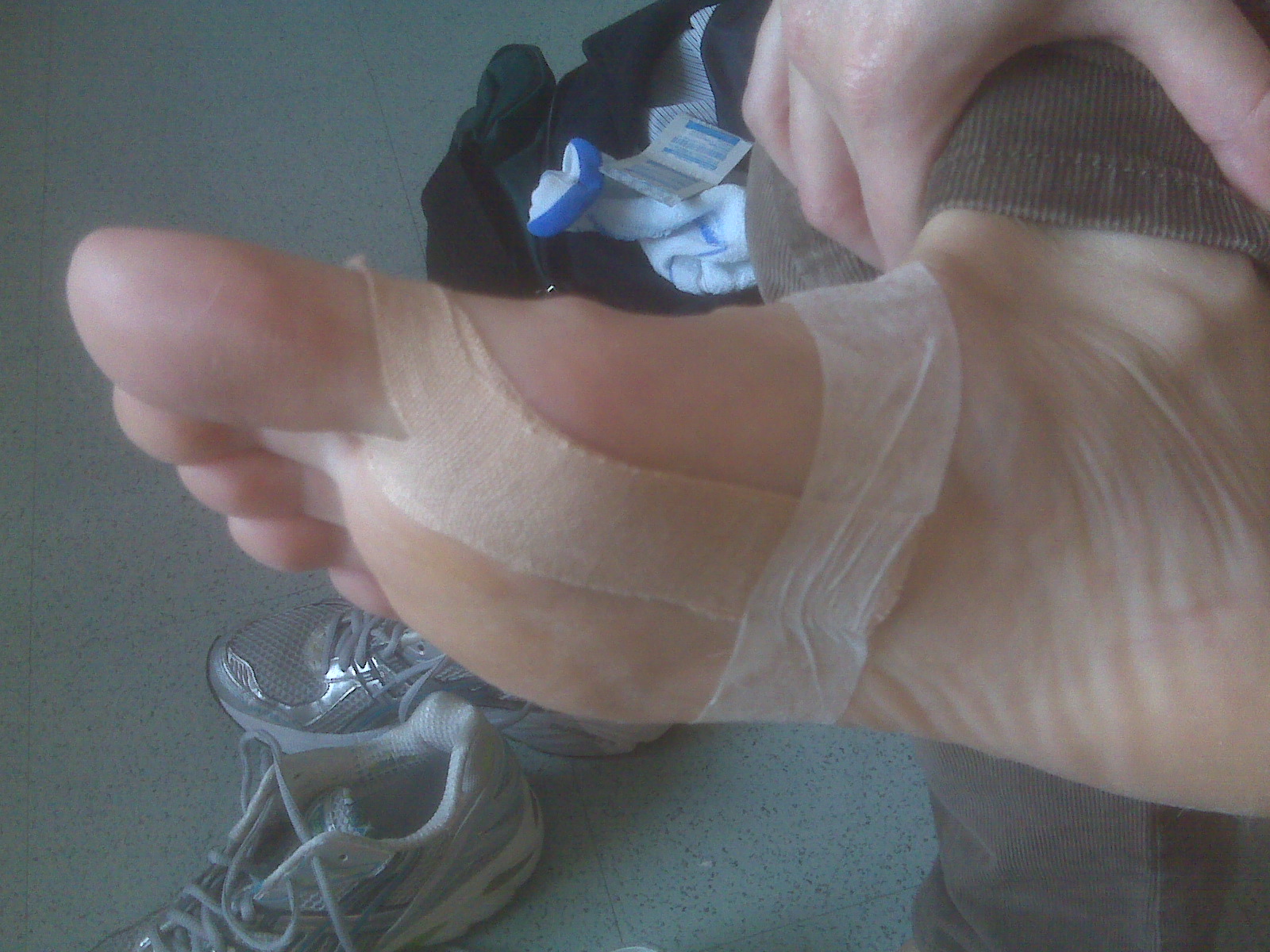
  3. Learn how to spica tape the big toe joint for times you want to immobilize (see my video at YouTube entitled drblakeshealingsole Spica Taping).spicataping3.jpg
  4. Learn how to make dancer’s pads for any shoe or boot to off weight the big toe joint. One eighth inch adhesive felt can be purchased from www.mooremedical.com for this purpose. Dancer's Pad.jpg
  5. Learn if arch supports are necessary to transfer weight to the arch and middle of your foot. You can try the Red Sole inserts sold online or at stores like REI.Your Sole Inserts.jpg
  6. See if you can get xrays and an MRI to look at the health of the joint internally.
  7. Purchase a carbon graphite plate that can be used in some shoes under the insert to limit the joint motion for some activities.
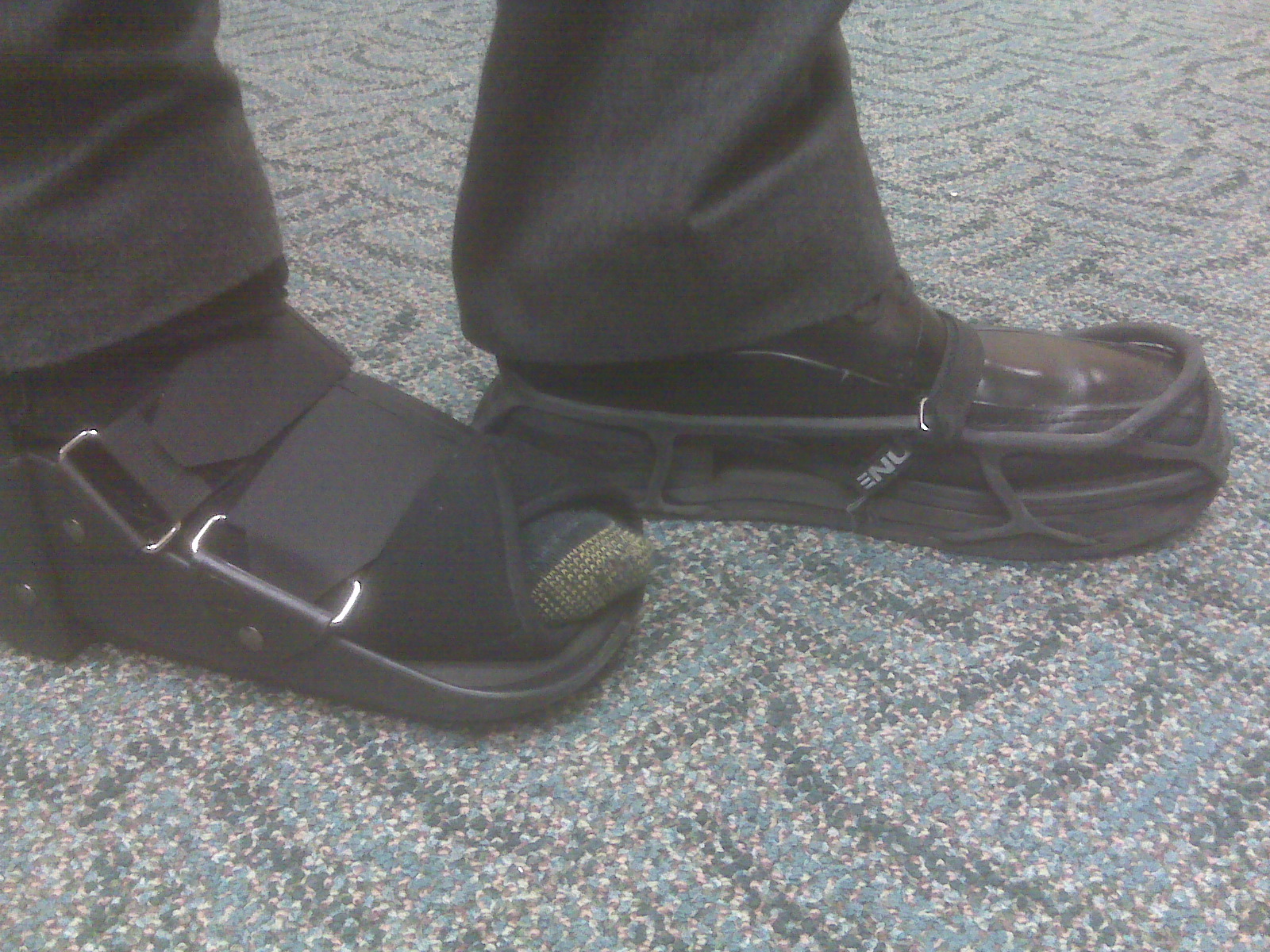
  8. If you were started in a boot to obtain a pain free environment, purchase an Evenup to keep the spine level and avoid back issues. Removable Boot with Evenup3.jpg
  9. From the day you begin treatment, begin strengthening your feet, and lower extremities. Avoid pain, but this approach will lessen the deconditioning. This can be mean a lot of core work, some cardio on stationary bikes, and specific foot exercises approved by the health care provider (as long as they do not hurt is the general rule).dreamstime_m_40635691.jpg
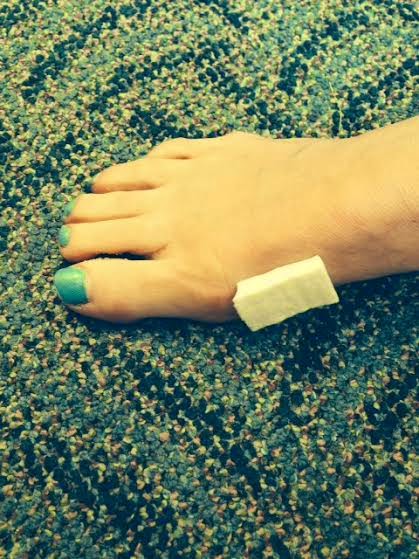
  10. Use adhesive felt on the top of the foot (typically 2 layers of 1/8th inch or just ¼ inch) from www.mooremedical.com next to the bump at the top of the big toe joint, but not over, in any shoe that it helps take pressure off.Bunion protection.jpg
   
Patient Response:
Dr. Blake,
My MRI will probably arrive in your mailbox this week. But meanwhile, I have great news. While the MRI has been making its way to you, a random conversation at our local woodworking club (which for some reason attracts many surgeons--they especially like bowl turning on the lathe) led to an appointment with a wonderful, but very busy, foot and ankle orthopedic surgeon, much beloved by patients in our region. He takes the patients other surgeons abandon, saves limbs and gets people back on their feet.
I just got back from my appointment with him at our local fracture clinic where he examined my foot (stealthily while making conversation) finding good movement in my joints (which I hadn't moved in weeks!), and said much the same thing that you've been saying all along: get the foot moving again!  He said (as you did) that the blood pooling, residual swelling, pain and stiffness are largely a result of non-weight bearing and immobilization.  He also said that too many patients are referred on the basis of x-rays. He said "treat the patient, not the x-ray" and said the only time he would consider fusing a joint is if there was a considerable lack of function.  He said even a poorly healed or even non-union fracture of the the small bones of the foot can often pose no significant problem for the patient even when they appear "like corn flakes on the x-ray".  Anyway, all this is to say that he advised me to start remobilizing right away (contrary to the advice of my sports medicine doctor who had asked me to remain non-weight bearing for three more weeks).  The surgeon said prolonging immobilization can cause weakness leading to secondary injuries.  I'm very eager to start rebuilding my leg muscles and foot strength and reclaiming my life.  I sincerely like my sports medicine doctor, but don't know why his advice was so different from yours and the surgeon's.  It's hard to contradict a doctor's advice as a layperson. I wish I hadn't remained non-weight bearing for so long out of fear of delaying the fracture healing.  In any case, I'm looking forward with optimism.

I just purchased a pair of Wolky sandals, a new brand to me.  The model called Jewel has three adjustable velcro straps (which is wonderful for someone with a very high arch like me), a fairly rigid sole with rocker front, and a removable cork foot bed into which I've put my own cobbled- together foot bed with strategic offloading padding. They are far more attractive than typical orthopedic shoes and your other patients might find them very helpful: http://wolky.com/shoes/jewel/.
It feels wonderful to be transitioning to real shoes again. I believe I will be walking without pain or crutches very soon!
Thank you again for your support and very good advice.  Please feel free to use my case for your blog if you think any part of it will be helpful for others.  Your blog was such a great source of sensible, straightforward practical advice during dark days when was very easy to fall into worst case scenario speculation.  Thanks Dr. Blake!

Saturday, February 21, 2015

Dancer's Pads from Dr Jill Company for sesamoid protection


Dr Jill's Dancers Pad

    One of my sesamoid suffering patients brought Dr Jill's Dancers Pad to my attention. She loves it since it sticks comfortably to the foot and so she can wear in shoes/situations that may not work well with orthotic devices. 

http://www.drjillsfootpads.com/index.php?main_page=product_info&products_id=5&zenid=u8m5hkkn3m0ikmfffja9hb4dt5

Friday, February 20, 2015

Sesamoid Injuries: Questions

This is my answers to a student studying the treatment of sesamoid fractures with my comments in red. 

Thank you so much! Below are some questions:
1. Which method would you recommend for the rehabilitation of the sesamoid bone in the foot? 
     I prefer to treatment conservatively with a removable boot for awhile, then orthotics that can off weight the area. The only other method would be surgery, which may be unnecessary, and I think the last resort. Lack of response to treatment, coupled with MRIs showing bone fragmentation will sway me towards surgery. Any treatment done, if surgery is eventually needed, will help greatly in the rehabilitation (like designing a good off weighting orthotic device). 
2. Why this method? 
     My personality which is conservative, and seeing patients still having bothers after surgery sometimes, knowing that surgery is not always the perfect fix. Any treatment should get the patient to no disability, and conservative treatment can do that the majority of time. 
3. Which method would you say is the worst? Why?
     Neither, because both have their pros and cons. The surgical treatment for a broken sesamoid is technically easy, and gets patients back on the road quicker than stubborn cases of conservative treatment. The con of surgery is that you are potentially removing a vital bone, and surgical complications can lead to some permanent problem. Conservative treatment avoids bone removal (leaving your anatomy intact) and avoids surgical complications. However, conservative therapy may take up to 2 years to complete (generally 6-9 months is normal), which would be difficult in a highly functional athlete, with no complete guarantee that it will not, in the end, require surgery. 
4. What is the most common way of injuring the sesamoid bone in the foot? 
     From the impact of sports
5. Have you ever heard of someone getting arthritis in their big toe from a certain treatment?
     The sesamoid is bottom part of the big toe joint. If the bone is fractured and irregular is can start arthritis forming on the under surface of the first metatarsal. When I x-ray and MRI or CT, I am always checking for signs of that. 
6. If you had to put your patient in orthotic devices, would it be a Morton's extension or a Dancer's pad (apologies if my terminology is off, while researching I realized some doctor's use different names)?
      The six basic designs for sesamoid injuries, which can be used in some combination, or with all of them are:
  1.  Enough arch support or varus wedging to shift the weight back into the arch and over to the 2nd and 3rd metatarsals as you move through your foot.
  2. Metatarsal arch support to shift weight laterally (towards the outside of the foot).
  3. Dancer's pads (aka Reverse Mortons) to shift the weight laterally as the weight goes onto the metatarsals at pushoff.
  4. Cushioning under the first metatarsal head
  5. Minimal heel lift not to shift too much weight forward
  6. Stiff forefoot area to minimize bend if needed (at least a design that does not encourage excessive big toe joint motion).  
7. What sort of side-effects could occur if one was to perform surgery to remove the bone(s)?
     I find that the crucial question is why did the patient get this in the first place. If the surgery does not correct that, and most of the time it can not, then removing the sesamoid puts the other at more risk. Losing one sesamoid is not the perfect scenario, but you are still highly functional. If you lost both sesamoids, you have not protection for the first metatarsal head. Removing the medial sesamoid does make you more at risk for bunions, but if you start wearing toe separators and yoga toes, and start doing abductor hallucis strengthening, you can minimize that. Typically when you injure something, there is an obvious cause, and several still important less obvious causes. After surgery, you have to know what the causes were and prevent them in the future. I find this area is addressed the best while the doctors are trying to avoid surgery in the first place, learning why it happened helps with designing treatments. Only some of the causes are: poor running or walking styles, poor shoe selection, inadequate fat pad, high arches, plantar prominent first metatarsals, training techniques, improper cleat placements, poor bone health, transient Vit D or Calcium inadequate intake, over pronation, stiff foot that does not adapt to ground, etc. I am sure I have left out quite a few. 
8. It was brought to my attention that some people are born with their sesamoid already in two pieces, do they experience the same problems of someone who has broken their sesamoid experiences?
     Yes, even when the sesamoids are congenitally in two or more pieces, they can still fracture or bruise these small bones. I feel having the bone in multiple pieces greatly confuses the diagnosis. It is too easy to say they are congenitally that way, so they must not be injured. These separated pieces can develop fractures, but they are even more prone to sprains between the bones. These sprains are impossible to fully diagnose, and seem to cause lingering pain more than from a fracture. So, when I see the bone in more than one piece, and the pain matches a stress fracture level, I am more worried that they are going to have a difficult time healing (at least quickly). I sure hope all these answers help you and other reading. Dr Rich Blake